Attack Delay and Investigation
Uses business simulation, simulated vulnerabilities, counter-lures, attack tracking, and targeted response to accurately identify attacker intent while preserving a complete chain of evidence.

An independently developed intrusion-prevention system that uses deception and decoy technologies to disrupt and delay attacks across internal and external networks.
The BIG Deception and Honeypot System simulates business environments to create a decoy network of realistic but fictitious services. Carefully placed lures attract attackers to these decoys, enabling the system to capture malicious activity and generate timely alerts. It delays attacks, obscures real targets, protects production systems, and helps identify attack sources in real time—transforming passive defense into proactive defense and improving both security effectiveness and incident response.
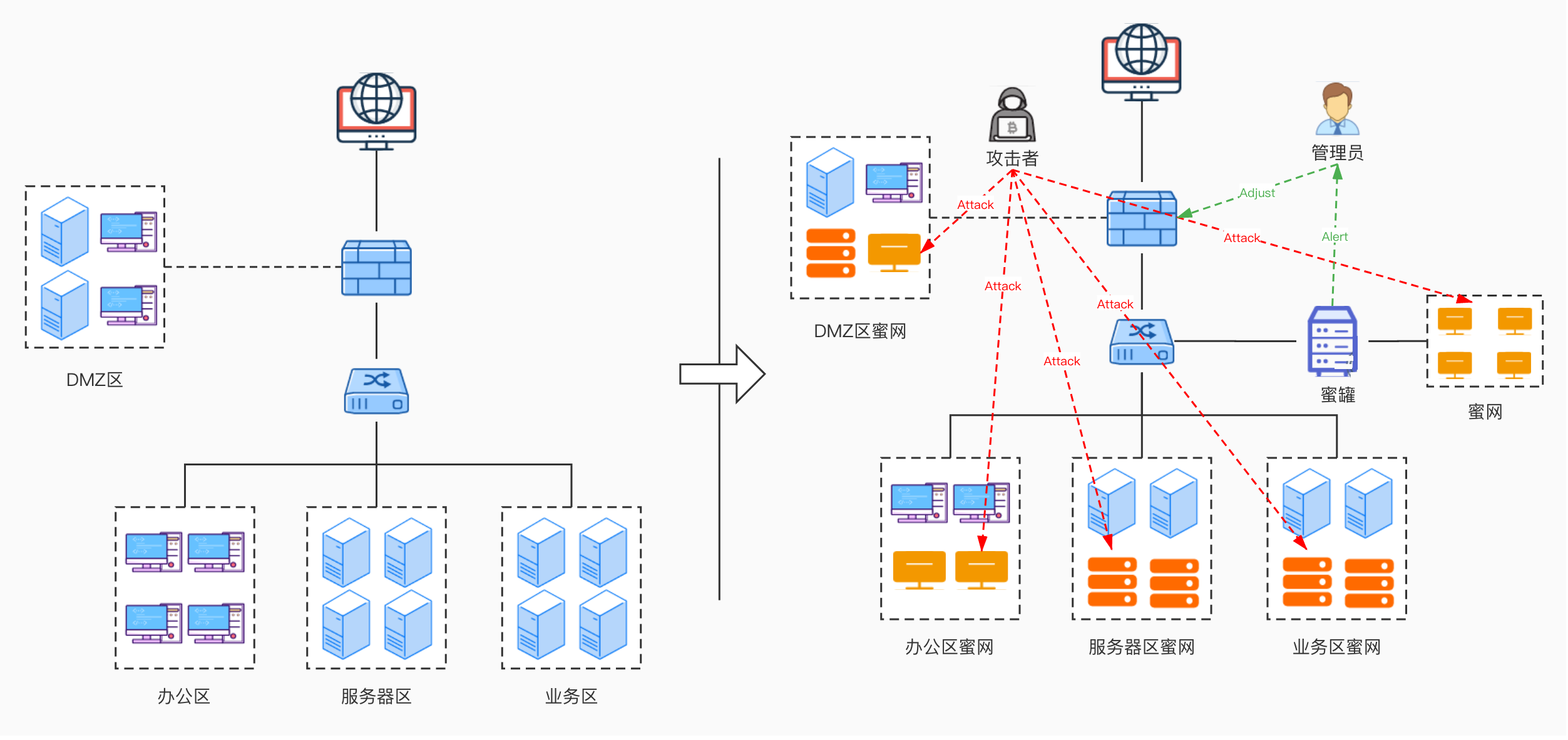
Uses business simulation, simulated vulnerabilities, counter-lures, attack tracking, and targeted response to accurately identify attacker intent while preserving a complete chain of evidence.
Virtualized deception environments can cover critical business systems in specific scenarios, containing attacks within isolated decoy networks and reducing the risk of lateral movement or escape.
By analyzing and detecting attacker behavior, the system captures suspicious activity and traffic across the network, continuously monitoring changes that may indicate a threat.
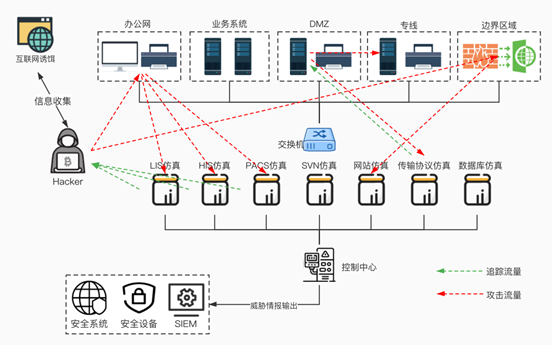
Network deception is an active security-defense technique. Defenders create targets that appear valuable to attackers, encouraging them to engage and thereby expose their tools, techniques, and methods.
Using modern network-deception technologies, the BIG system simulates servers, files, network segments, and valuable services based on asset inventories and network scans. Docker-based isolation and virtualization support both low- and high-interaction honeypots, delivering visibility across all ports and network traffic.